

A new employee decides surprisingly early whether they made the right choice. A first day spent waiting for a laptop, a first week without a clear plan, and a manager who is "too busy this month" all send the same message: figure it out yourself.
A structured onboarding checklist fixes this. It makes sure nothing is forgotten, gets new hires productive sooner, and takes pressure off managers who otherwise rebuild the process from memory every time.
Who owns onboarding?
Onboarding works best when responsibilities are clear:
Pre-boarding: after the offer is signed
HR
- Send the welcome email with start date, time, location or joining link, dress code and who to ask for
- Collect documents and complete joining paperwork digitally
- Set up payroll, attendance and leave records
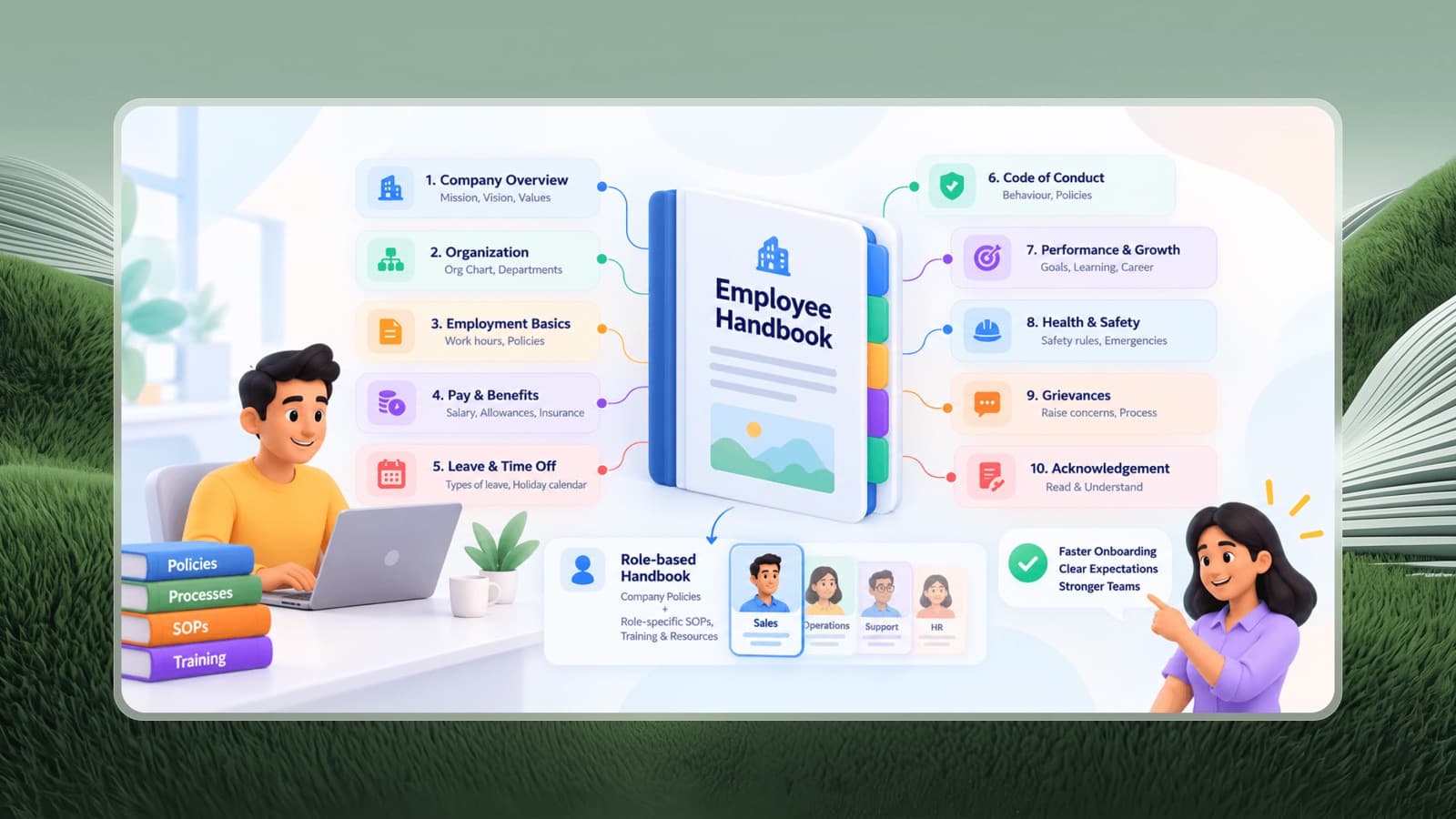
- Share the employee handbook to read before day one
IT / Admin
- Order and set up laptop, phone or equipment
- Create email and system accounts with the right access for the role
- Prepare desk, ID card, uniform or access card
Manager
- Confirm the role's job description and responsibilities are up to date
- Prepare the first-week schedule and first tasks
- Assign a buddy and brief them
- Announce the new joiner to the team
Day one
The goal of day one isn't productivity. It's for the new hire to feel expected, welcomed and clear about what happens next.
- Manager or buddy greets them in person or on the call
- Workspace, equipment and logins ready and working
- Office tour or virtual tour of key tools
- Introductions to the team and key colleagues
- Walk through the company org chart - who's who and who to go to
- Lunch or informal chat with the team
- Manager meeting: role overview, first-week plan, first 30-day goals
- End-of-day check-in: "What questions do you have?"
First week
- Complete mandatory policy and compliance reading
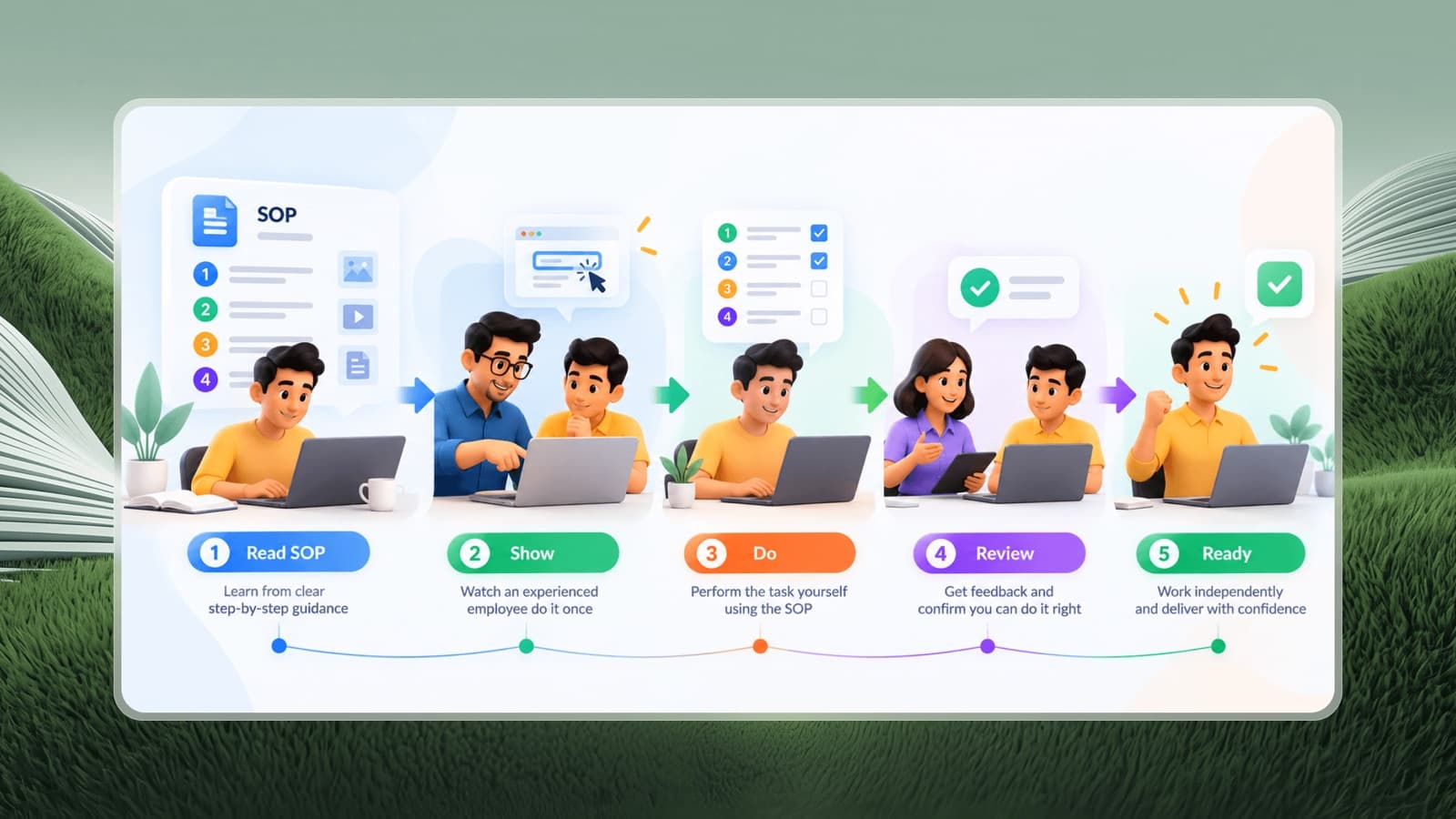
- Learn the core processes for the role through documented SOPs
- Shadow teammates on real work
- Complete one small, real task with support - early wins build confidence
- Meet key people from other departments they'll work with
- Daily short check-in with the manager or buddy
- End-of-week review: what went well, what's confusing, what they need
The 30-60-90 day plan
Days 1-30: Learn
- Understand the company, customers, products and team structure
- Learn the role's core processes and tools
- Complete role-based training
- Take on routine tasks with review
- Check-in at day 30: progress against goals, feedback both ways
Days 31-60: Contribute
- Work independently on most routine tasks
- Take ownership of specific responsibilities
- Start suggesting improvements to processes
- Check-in at day 60: performance against the role's KPIs, areas for development
Days 61-90: Own
- Fully own the role's responsibilities
- Meet agreed performance targets
- Contribute to improving at least one process or SOP
- Review at day 90: confirm successful onboarding, set goals for the next quarter, decide on probation outcome where relevant
Measuring onboarding
Track a few simple signals:
- Time to productivity: how long until the new hire handles core tasks independently.
- Early exits: how many new hires leave in the first 90 days.
- New hire feedback: a short survey at day 7, 30 and 90.
- Manager feedback: is the new hire where you expected at each check-in?
Make onboarding repeatable
The biggest onboarding problem in growing companies isn't a bad checklist - it's that onboarding depends on which manager you get. The fix is to make role-specific onboarding content permanent: a handbook per role, documented SOPs for each duty, and a checklist that runs the same way every time.
Once that exists, training new employees stops being a favour managers do in between their real work and becomes a system that runs on its own.