
An employee handbook is the single place where a company explains who it is, how it works and what it expects from its people - and what people can expect in return. Done well, it answers most of the questions new hires would otherwise ask their manager. Done badly, it's a 60-page PDF signed on day one and never opened again.
What an employee handbook is for
A good handbook does four things:
- Communicates culture: mission, values and how the company works.
- Sets expectations: conduct, attendance, performance and communication.
- Explains policies and benefits: leave, pay, expenses, remote work.
- Protects the company and employees: by documenting rules clearly and consistently.
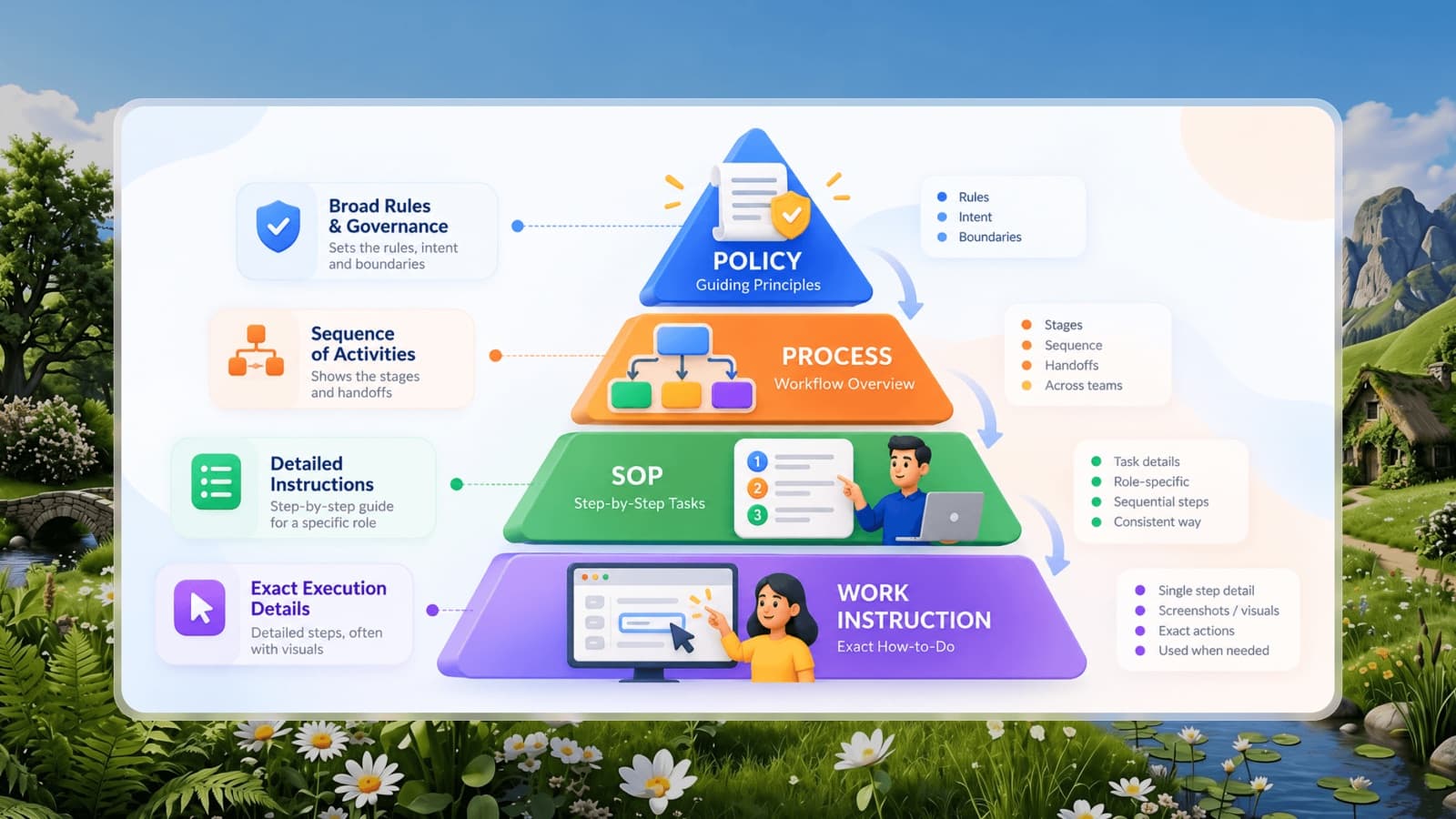
A handbook is not a substitute for employment contracts or for the step-by-step SOPs people use to do their jobs - though it should link to them.
What to include in an employee handbook
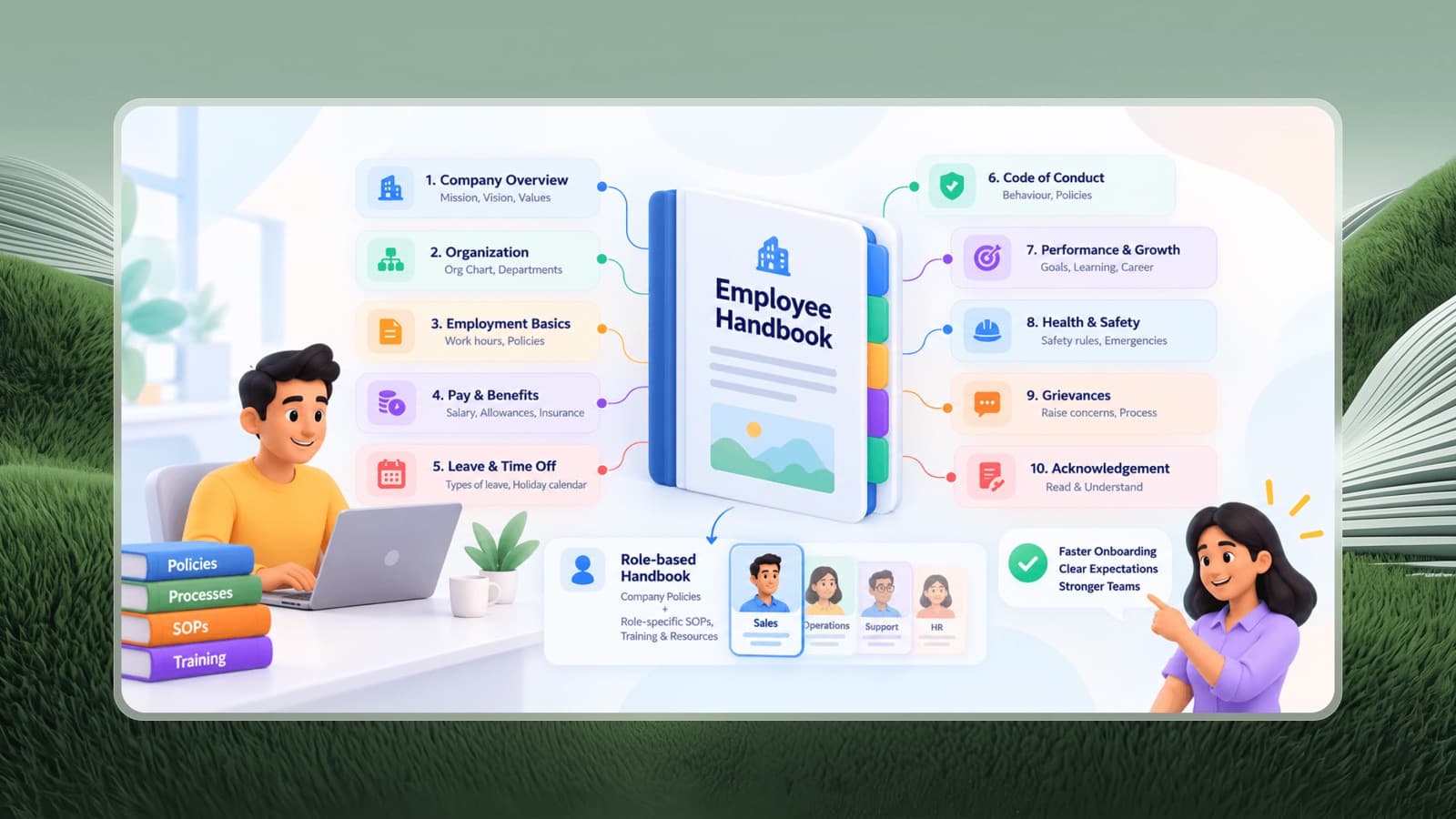
1. Welcome and company overview
- A short welcome from the founder or leadership
- What the company does and who it serves
- Company history in a few paragraphs
- Mission, vision and values - with examples of what each looks like in practice
2. Organization and people
- The company org chart or a link to it
- Departments and what each one does
- Who to contact for HR, IT, payroll and admin questions
3. Employment basics
- Types of employment (full-time, part-time, contract, intern)
- Probation period and confirmation process
- Working hours, shifts and attendance rules
- Remote and hybrid work policy
- Notice periods and resignation process
4. Pay and benefits
- Pay cycle and payslips
- Statutory benefits relevant to your location
- Insurance, allowances and reimbursements
- Expense claim process
- Performance bonus or incentive schemes, if any
5. Leave and time off
- Types of leave and how many days each person gets (annual, sick, casual, parental, public holidays)
- How to apply for and approve leave
- Holiday calendar
6. Code of conduct
- Expected behaviour and professional standards
- Anti-harassment and anti-discrimination policy, with how to report concerns
- Conflicts of interest
- Use of company property, devices and internet
- Social media guidelines
- Confidentiality and data protection
7. Performance and growth
- How goals are set and performance is reviewed
- Feedback and one-on-one practices
- Training, learning and career progression
8. Health and safety
- Workplace safety rules
- Emergency procedures
- Incident reporting
9. Discipline and grievances
- How concerns and complaints are raised and handled
- Disciplinary process
10. Acknowledgement
- A statement that the employee has read and understood the handbook
How to write a handbook people actually read
Write like a person. "You get 12 days of paid leave per year" is clearer than "Employees shall be entitled to twelve (12) days of paid leave per annum".
Lead with the answer. Put the rule first, then exceptions and detail.
Keep policies short, link to procedures. The handbook explains the leave policy; a separate SOP explains how to apply in the HR system. Our article on SOPs vs policies vs processes explains why this separation matters.
Make it searchable. A digital handbook that people can search on their phone beats a PDF every time.
Get legal review for policies with legal implications. Employment law varies by country and state, so have someone qualified check your policies.
Company handbook vs role-based handbook
A traditional handbook is the same document for everyone. That's right for company-wide policies, but it doesn't help a new sales executive learn how to do their job.
Growing companies increasingly add role-based handbooks on top of the company handbook. Each role gets:
- The company-wide policies everyone needs
- That role's responsibilities and KPIs
- The SOPs for that role's duties
- Role-specific training content
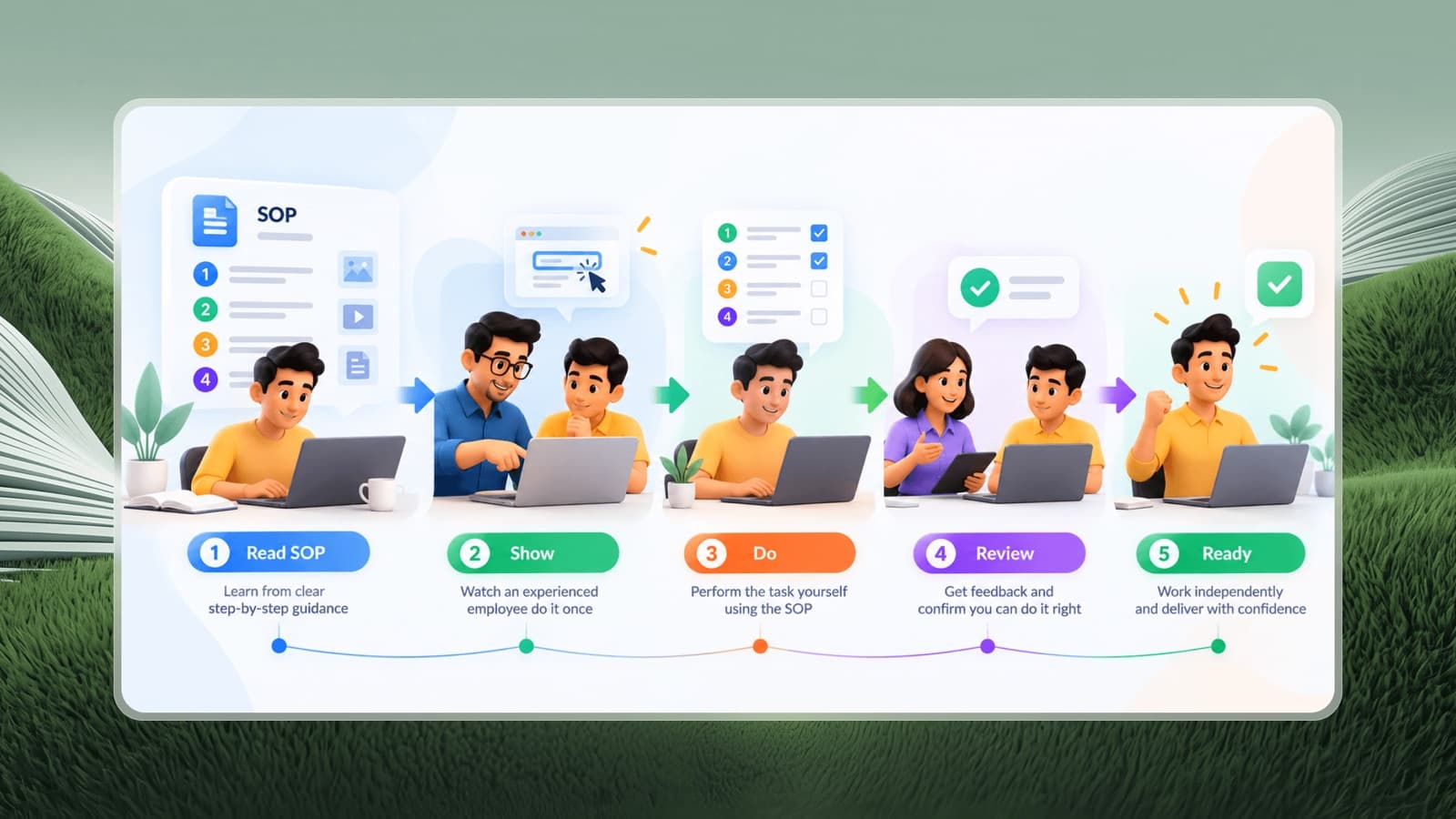
This means new hires see what's relevant to them in the order they need it, rather than scrolling through a hundred pages to find the three things that matter this week. It's also the fastest way to cut onboarding time.
Keeping the handbook current
- Give the handbook an owner, usually HR.
- Review it at least once a year and whenever laws or policies change.
- Keep a change log and tell employees what changed.
- Collect the questions new hires ask in their first month - each one is a gap in the handbook.
A handbook isn't a one-time project. Treat it like a product: publish, listen, improve.