
In most small and growing businesses, training a new employee means one thing: sitting them next to someone experienced and hoping enough knowledge transfers. It works, eventually. But it's slow, it takes your best people away from their work, and every new hire learns a slightly different version of the job.
A better approach is to build training on top of your documented processes. Here's how.
Why shadowing alone doesn't scale
- Inconsistent. Each trainer teaches their own shortcuts and habits.
- Expensive. Your most productive person spends days explaining instead of doing.
- Forgettable. New hires see a process once, then have to remember it days later when it comes up again.
- Risky. If the experienced person leaves, the training leaves with them.
Shadowing still has a place - but as one part of a system, not the whole thing.
Step 1: Define what "fully trained" means for the role
Start from the role's responsibilities and duties. List every task a fully trained person handles independently. For a customer support executive, that might be:
- Respond to tickets using the right templates
- Process refunds and replacements
- Handle escalated complaints
- Update order status in the system
- Log bugs and product issues correctly
This list becomes your training checklist and your definition of done.
Step 2: Make sure each task has an SOP
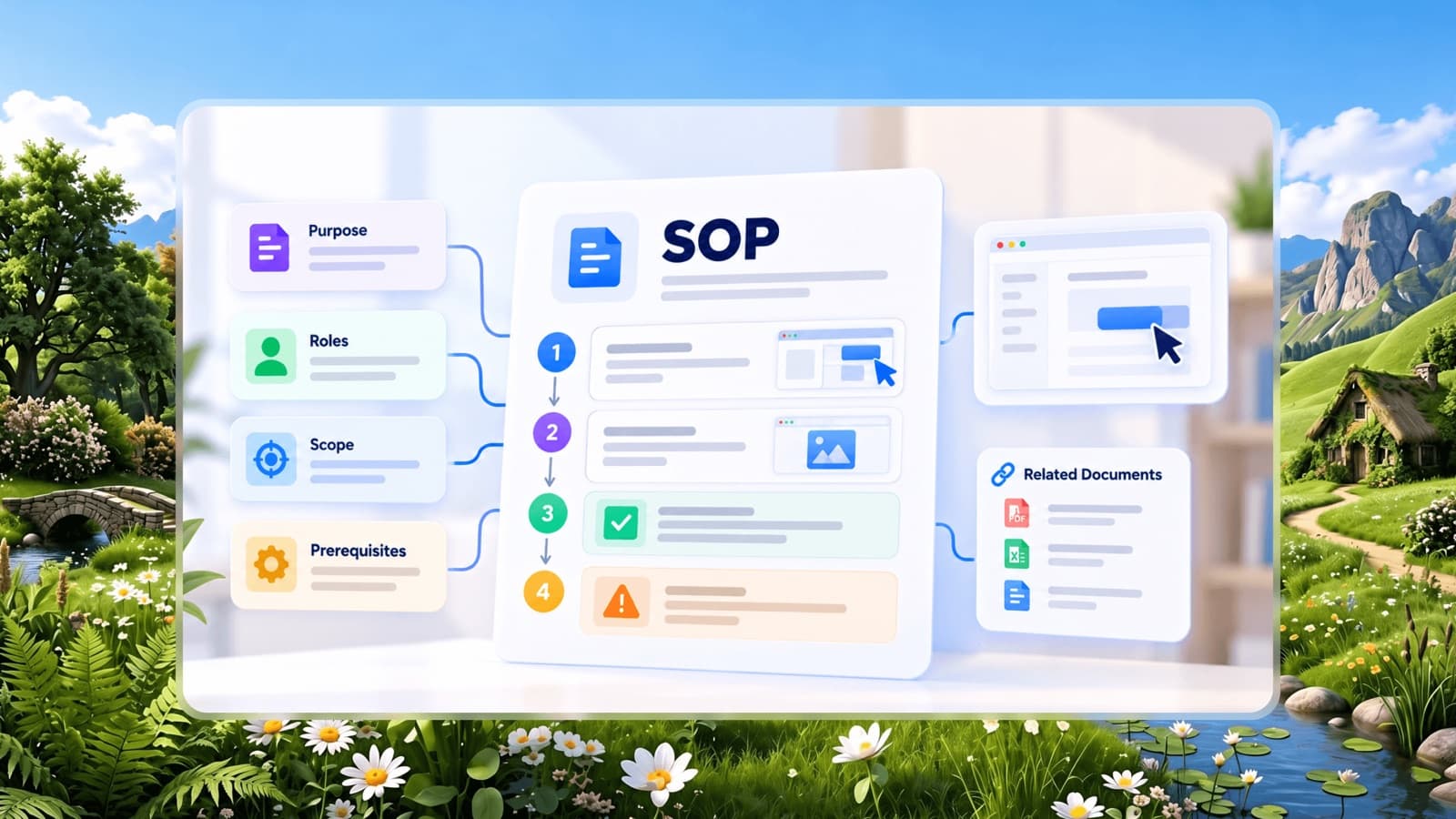
Map each task to a documented SOP. Where an SOP doesn't exist yet, create it before the next hire starts - ideally by recording the experienced employee doing the task once.
This is the step that makes every future hire cheaper to train. You write the SOP once; every trainee uses it.
Step 3: Order tasks into a learning path
Sequence the tasks from simplest and most frequent to most complex and rare:
Early wins matter. A new hire who completes real work in week one gains confidence and context for everything that follows.
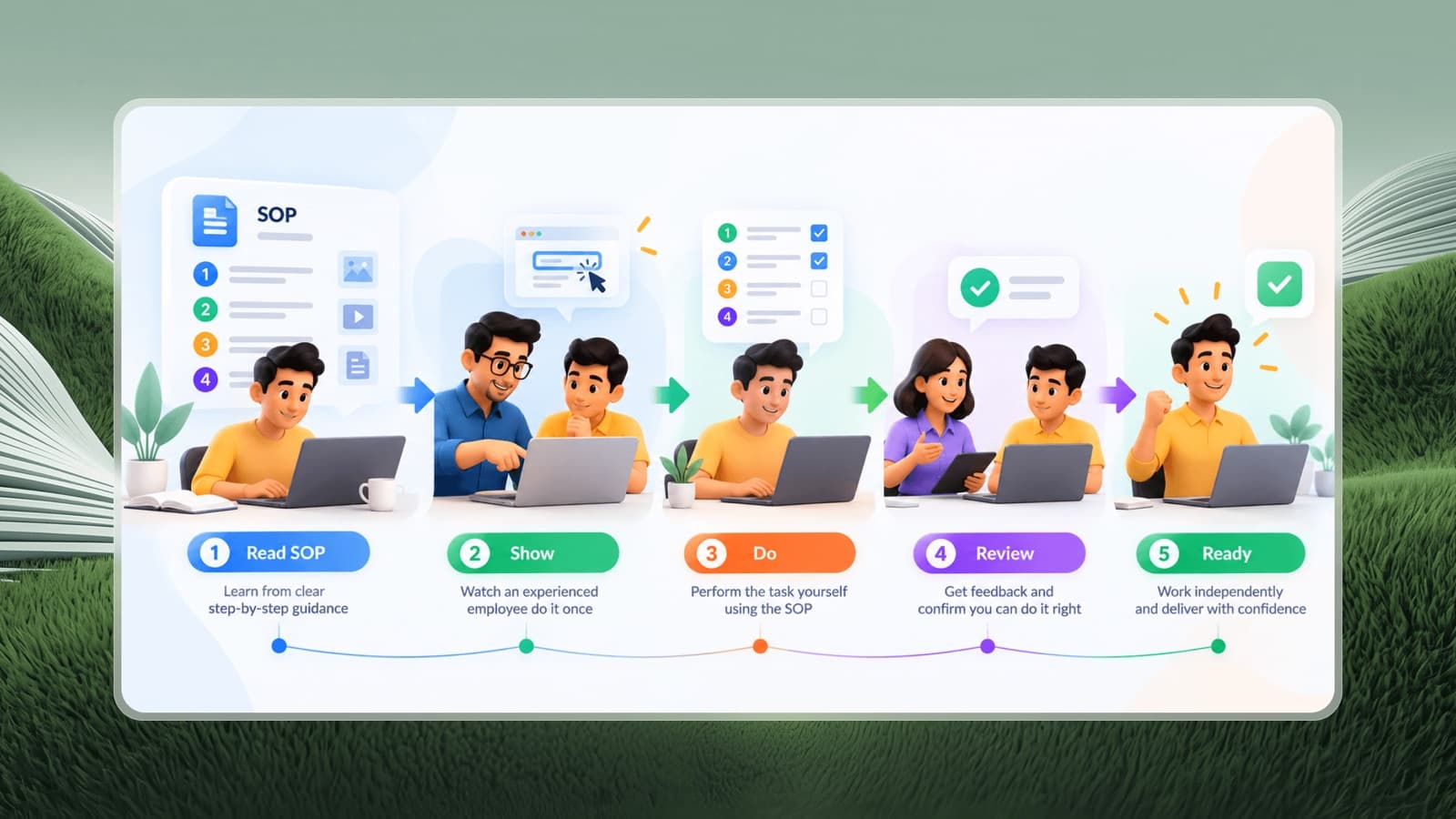
Step 4: Use show → do → review for each task
For each item on the path:
- Read the SOP.
- Show: watch an experienced colleague do it once, following the SOP.
- Do: perform the task themselves using the SOP, with the colleague watching.
- Review: the colleague checks the result and gives feedback.
- Repeat independently until the work consistently meets standard.
The SOP is present at every stage, so the new hire learns the documented way - and learns where to look when they forget.
Step 5: Check understanding, not attendance
"Completed the training" isn't the same as "can do the job". Use quick checks:
- A short quiz on key rules and decisions
- Observed task completion against the SOP's quality checks
- Review of real work samples in the first weeks
Sign off each task on the training checklist only when the person does it correctly without help.
Step 6: Turn trainee questions into better SOPs
Ask new hires to note every question they had to ask and every step where the SOP wasn't clear. These notes are some of the most useful feedback your documentation can get - fresh eyes see gaps experienced people can't.
Step 7: Measure time to productivity
Track how long it takes each new hire to complete the training checklist and reach the role's performance targets. As SOPs improve, this number should fall with each hire.
What this looks like in practice
A restaurant training a new server with this approach might give them:
- Day 1: handbook, service standards, menu SOP, POS basics
- Days 2-3: shadow two shifts, then take orders at two tables with the floor manager watching
- Days 4-7: own a small section, spot-checked; learn the complaint-handling SOP
- Week 2: full section, opening and closing checklists signed off
Compare that to "follow Rahul around for two weeks". Same restaurant, same trainer, very different consistency.
Build it once, use it every time
The work of creating role-based training is front-loaded: documenting SOPs and organising them into a path takes effort the first time. After that, every new hire - and every existing employee moving into a new role - follows the same path, and your experienced people get their time back.
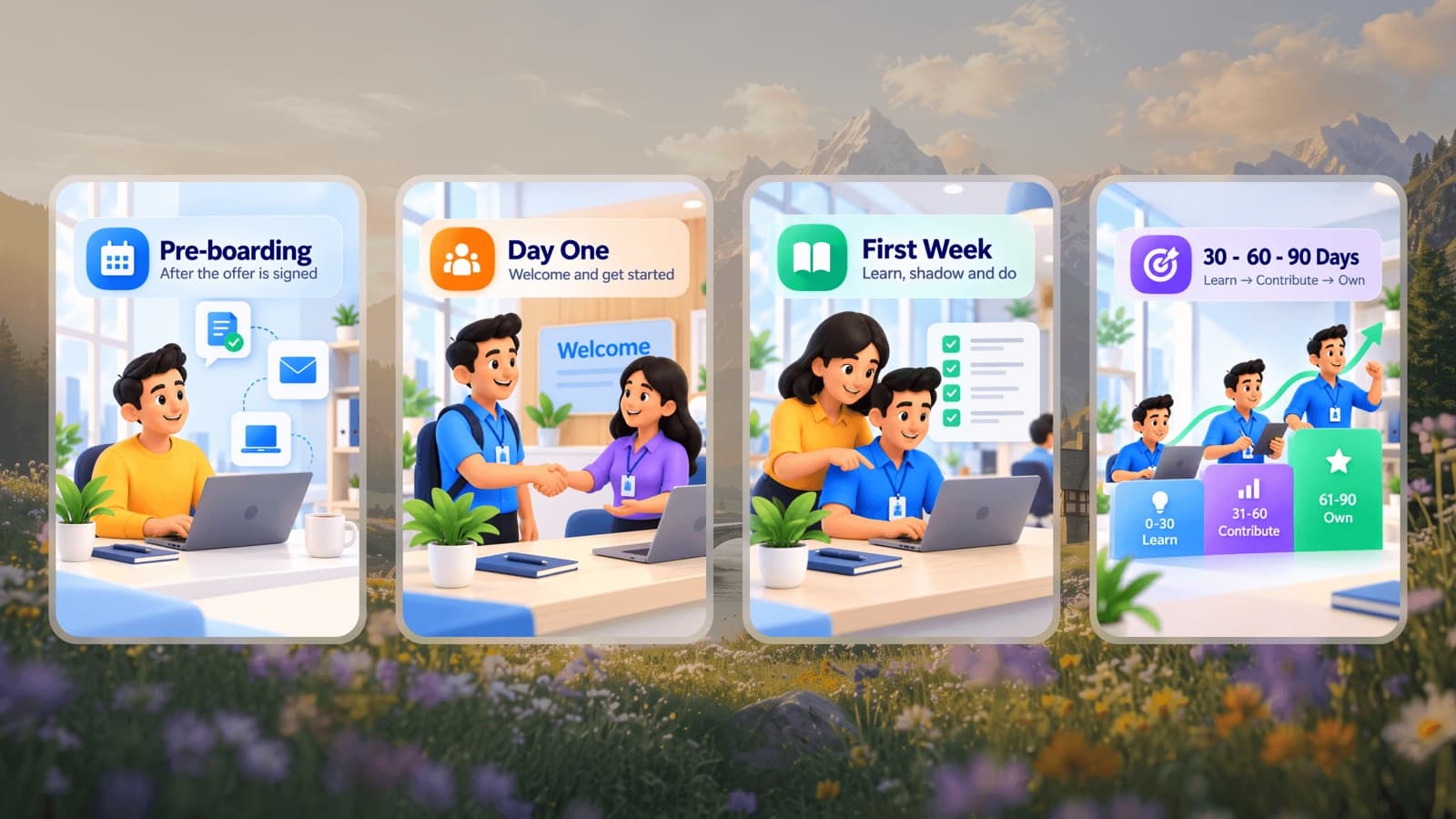
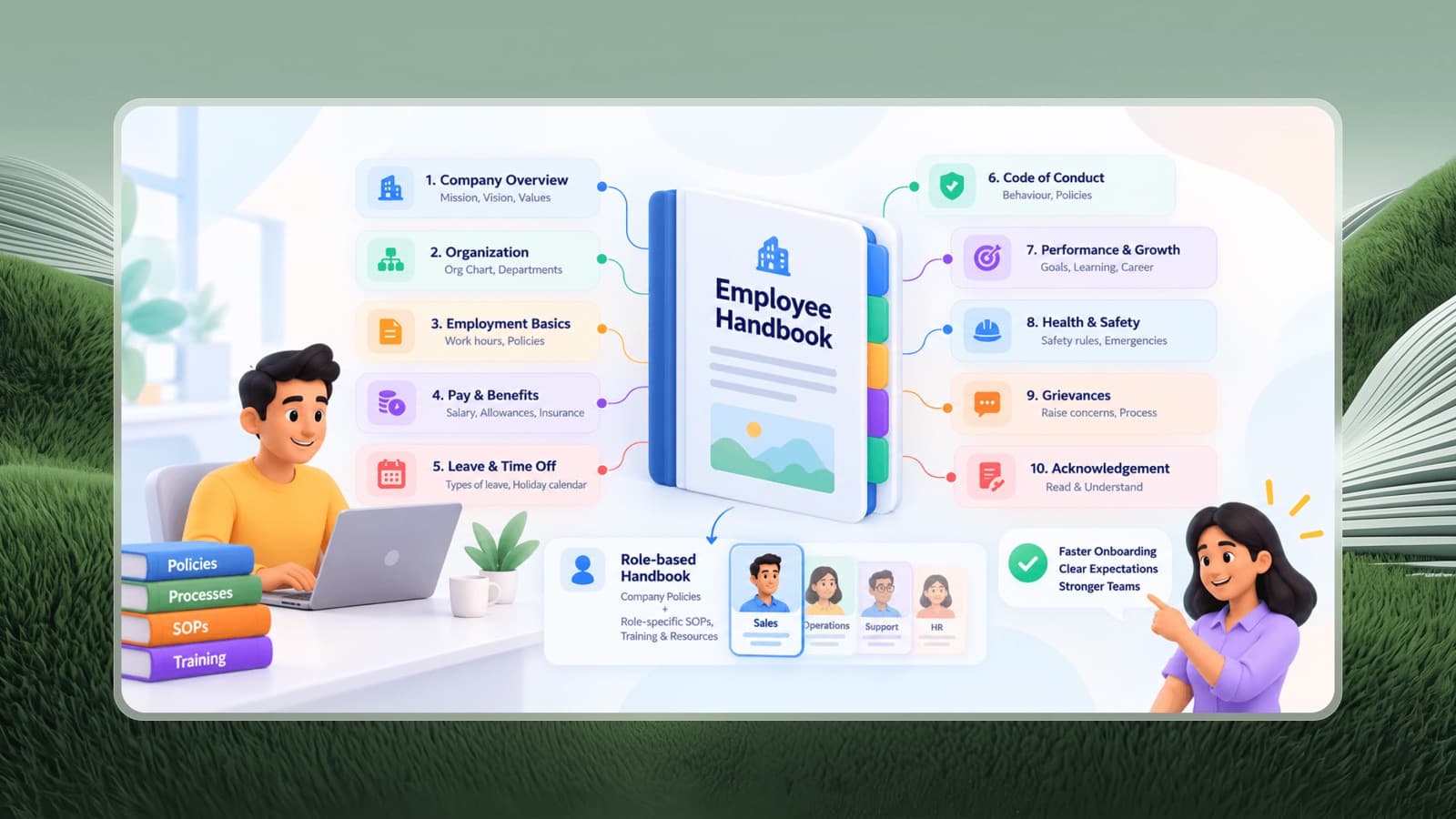
Pair it with a structured onboarding checklist and a role-based employee handbook, and training stops depending on who happens to be free that week.