
Ask five managers to explain the difference between a policy, a process and an SOP and you'll likely get five answers. The confusion isn't just academic: when companies mix these documents up, they end up with 20-page "policies" full of button clicks, or SOPs that say what should happen without ever explaining how.
Here is a clear way to separate them.
The short version
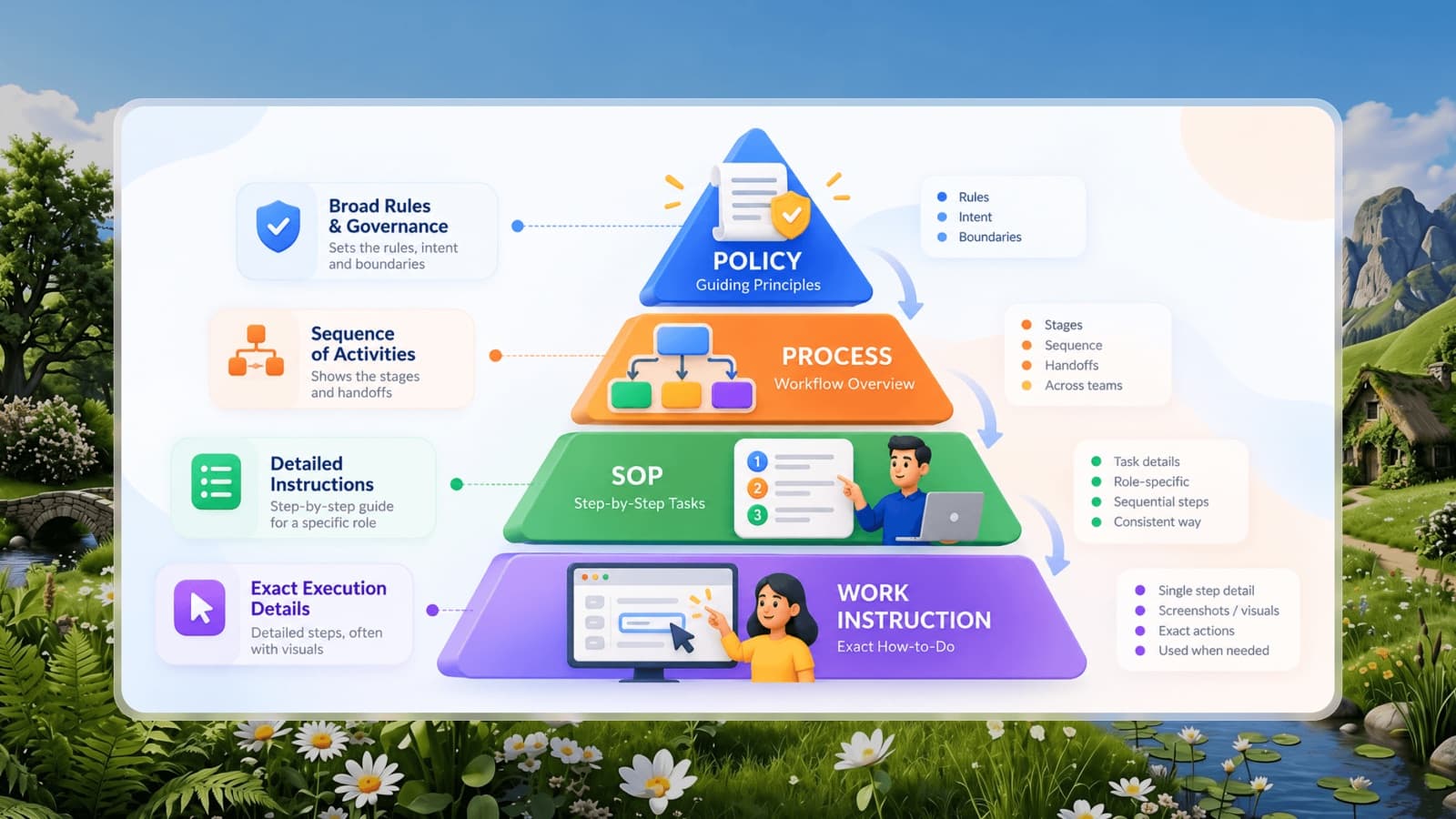
Think of it as zooming in: the policy sets the rule, the process maps the journey, the SOP explains the task, and the work instruction shows the detail.
What is a policy?
A policy is a statement of rules and intent. It defines boundaries and expectations without explaining how to carry them out.
- "Employees may work remotely up to two days per week with manager approval."
- "All customer data must be stored only in approved systems."
- "Refunds are available within 30 days of delivery for unused items."
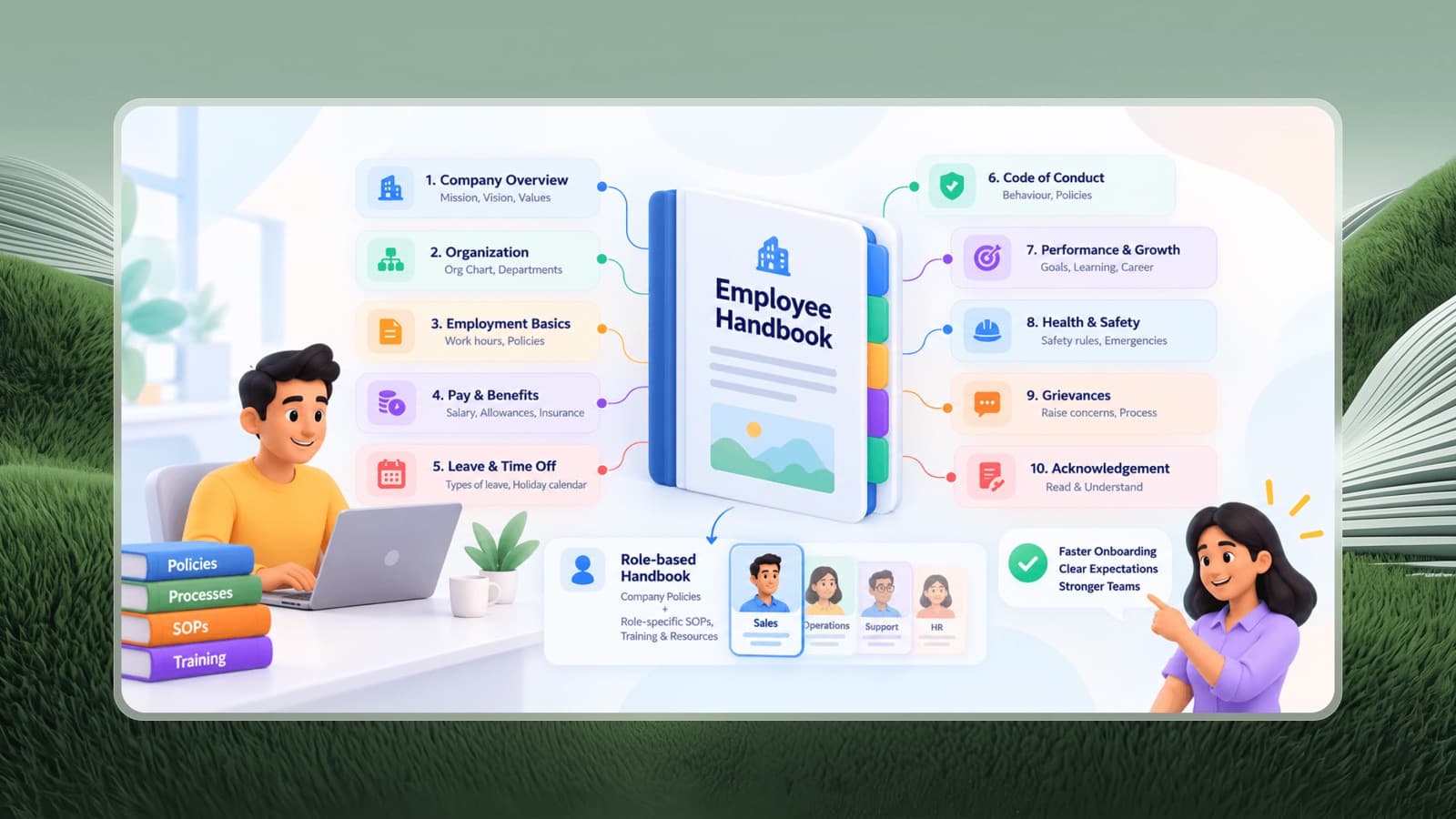
Policies are usually approved by leadership, apply broadly, and change rarely. They belong in your employee handbook.
What is a process?
A process is a sequence of activities that turns an input into an outcome, often across several people or departments. It shows the stages and who is involved at each, but not every click.
For example, an order-to-cash process might be: order received → order confirmed → goods dispatched → invoice raised → payment collected → payment reconciled.
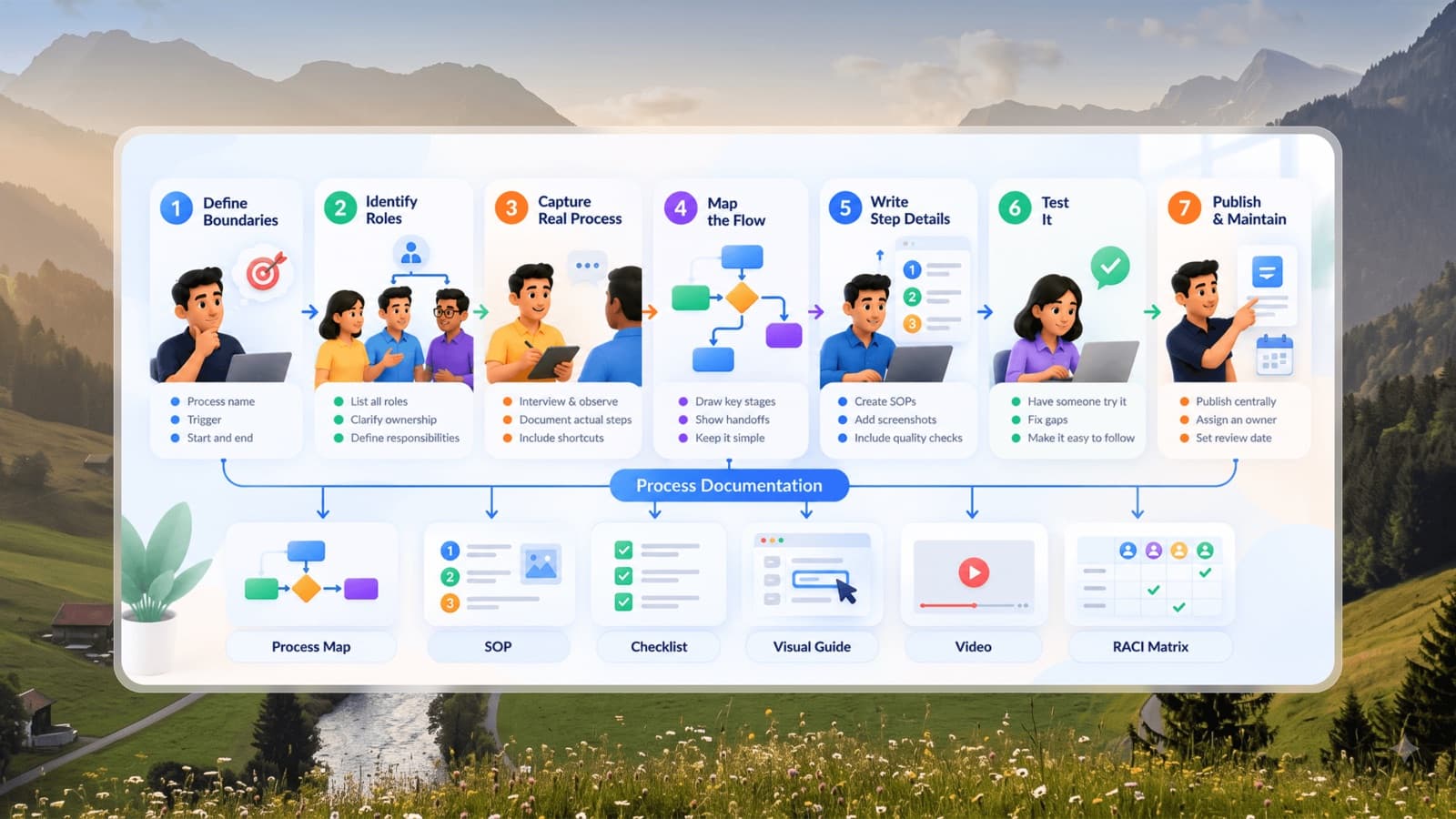
Processes are often drawn as flowcharts or swimlane diagrams. They're most useful for spotting handoff problems - the gaps between teams where work gets stuck.
What is an SOP?
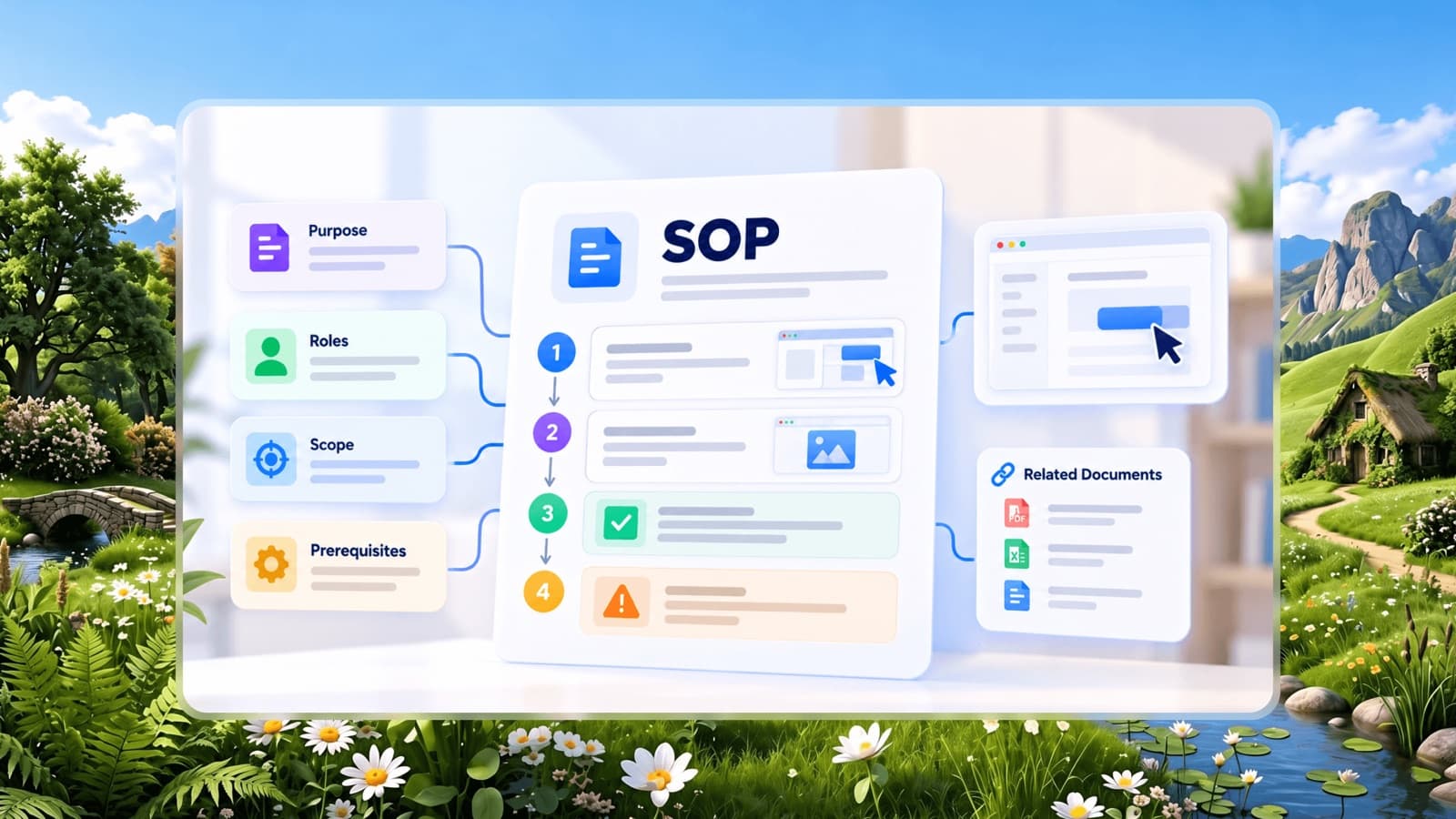
A standard operating procedure describes how one role completes one task within that process, step by step, in a consistent way. Using the same example, "Raise an invoice in Zoho Books" would be one SOP within the order-to-cash process.
SOPs are written for the person doing the work. They should be specific enough that someone new can complete the task correctly without asking for help. Our guide on how to write an SOP covers this in detail.
What is a work instruction?
A work instruction zooms in further on a single step that needs extra detail - often because it's technical, safety-critical or easy to get wrong. Work instructions are common in manufacturing, labs and healthcare, and are frequently visual: annotated photos, diagrams or short videos.
For example, within a machine setup SOP, a work instruction might show exactly how to calibrate one gauge.
Many smaller businesses don't need separate work instructions - detailed screenshots inside the SOP do the same job.
How they fit together: one example
Let's follow a refund all the way down.
Policy: "Customers can return unused items within 30 days of delivery for a full refund. Refunds are issued to the original payment method within 5 working days."
Process (returns):
- Customer requests return
- Support approves or rejects against policy
- Warehouse receives and inspects item
- Finance issues refund
- Support confirms to customer
SOP (for the support team): "Approve a return request" - open the ticket, check the delivery date is within 30 days, confirm the item is eligible, generate the return label, send the approval template, update the ticket status.
Work instruction: "Generate a return label in the courier portal" - with screenshots of each field.
Each layer references the one above: the SOP doesn't restate the whole refund policy; it links to it and applies it.
Why the distinction matters
Policies stay readable. When procedures are removed, policies shrink to a few pages people can actually read and agree to.
SOPs stay current. Tools change far more often than rules. Keeping steps out of policies means a software update doesn't require leadership to re-approve a policy.
Ownership is clearer. Leadership owns policies, process owners own processes, and team leads or senior practitioners own SOPs.
Onboarding is faster. New hires read policies once, understand processes at a high level, and use SOPs as a reference while they learn the job.
A simple rule of thumb
If a document contains the word must and no clicks, it's probably a policy. If it shows who hands off to whom, it's a process. If it tells one person what to do next, it's an SOP.
Keep all four in one organised, searchable place - ideally grouped by role - so people can move up for the "why" and down for the "how" without hunting through folders.