
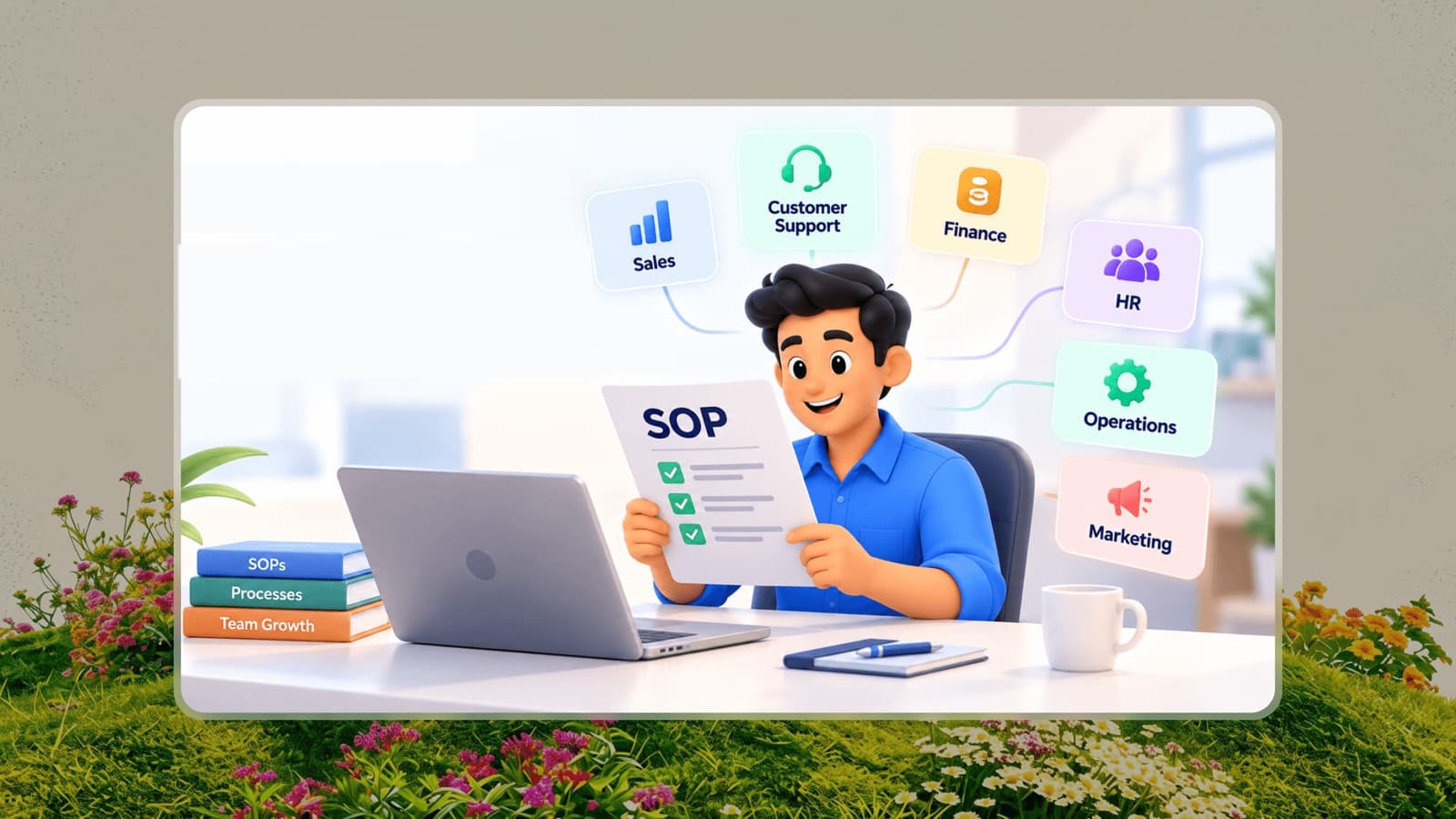
Knowing how to write an SOP is only half the problem. The other half is knowing which SOPs your business needs. Below are twelve SOP examples that most small businesses benefit from, grouped by department, with an outline of what each one should cover.
Use them as a starting list. You'll adapt the details, but the shape of each process is remarkably similar across industries.
Sales SOPs
1. Lead follow-up
Why it matters: leads go cold when follow-up depends on who happened to see the enquiry.
Outline:
- Log every new enquiry in the CRM within one hour, with source and requirement.
- Assign the lead by territory or product line.
- Make first contact by phone the same working day; send a follow-up email if unanswered.
- Qualify using a fixed set of questions (budget, timeline, decision maker, need).
- Book the next step or mark as unqualified with a reason.
- Follow up on this schedule: day 1, day 3, day 7, day 14.
2. Quotation and proposal
Outline: confirm requirements in writing, use the approved price list, apply discount limits by role, get approval above the limit, send from the template, set a follow-up reminder, record the outcome.
Customer support SOPs
3. Handling a customer complaint
Why it matters: complaints handled inconsistently turn fixable problems into public reviews.
Outline:
- Acknowledge the complaint within the response-time target.
- Record the complaint category, order details and customer expectation.
- Check the policy for the category (refund, replacement, repair, credit).
- Resolve within the executive's authority, or escalate with a summary.
- Confirm the resolution with the customer in writing.
- Tag the root cause so repeat issues can be fixed at source.
4. Processing a refund
Outline: verify the order and payment, check eligibility against the refund policy, calculate the amount, issue the refund in the payment system, notify the customer, update the order status and accounts.
Finance SOPs
5. Raising an invoice
Outline: confirm the order or milestone is complete, create the invoice from the accounting system template, check tax rates and customer details, get approval if above a set amount, send it, and record the due date for follow-up.
6. Paying supplier invoices
Outline: match invoice to purchase order and goods received note, flag mismatches to purchasing, route for approval by amount, schedule payment on the agreed run day, file the payment confirmation.
7. Month-end closing checklist
Outline: reconcile bank accounts, record accruals and prepayments, review receivables and payables ageing, reconcile inventory, run the trial balance, prepare the management report for the owner.
HR SOPs
8. Hiring a new employee
Outline:
- Get the role approved with a written job description.
- Post the opening on the agreed channels.
- Screen applications against must-have criteria.
- Run structured interviews using the same questions for every candidate.
- Check references and make the offer using the offer letter template.
- Hand over to the onboarding SOP once the offer is signed.
9. Employee onboarding
Outline: prepare accounts and equipment before day one, share the welcome email, run the first-day agenda, assign role-based SOPs and a buddy, hold week-one and day-30 check-ins. See the full onboarding checklist.
10. Employee exit
Outline: acknowledge the resignation in writing, agree the last working day, plan the knowledge handover (update the role's SOPs!), recover assets, revoke system access on the last day, process full and final settlement, conduct an exit interview.
Operations SOPs
11. Opening and closing checklist
Why it matters: in shops, restaurants, clinics and warehouses, the opening and closing routine protects cash, stock and safety.
Outline (closing): reconcile cash with the day's sales report, secure cash, check stock levels for tomorrow, switch off equipment in the listed order, check doors and alarms, record any issues in the shift log.
Marketing SOPs
12. Publishing a social media post
Outline: draft from the content calendar, check against brand guidelines, get approval, schedule with the correct tags and links, respond to comments within the agreed window, record performance weekly.
How to choose your first five SOPs
You don't need all twelve tomorrow. Pick five using this quick test for each process:
- Does a mistake here cost money, customers or compliance?
- Does more than one person do it?
- Does only one person know how?
- Does every new hire have to learn it?
Processes that get two or more "yes" answers go first. For most small businesses, that's complaint handling, invoicing, onboarding, opening/closing and lead follow-up.
Turn examples into real SOPs
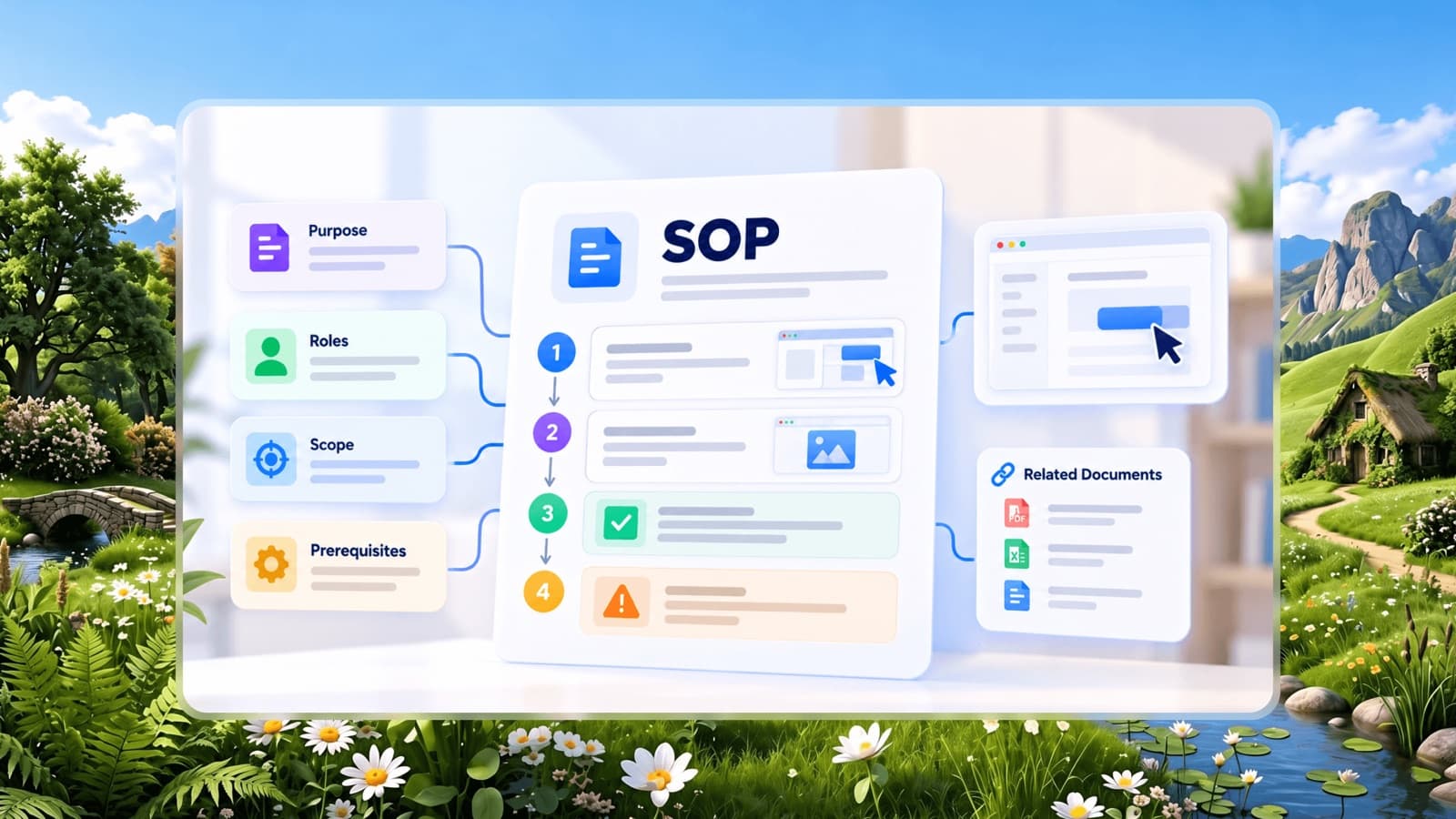
An outline is not yet an SOP. For each example you pick, sit with the person who does it best, capture the real steps with screenshots, and test the result with someone new. Our step-by-step SOP writing guide walks through that process, and the SOP format guide gives you a structure to keep every document consistent.