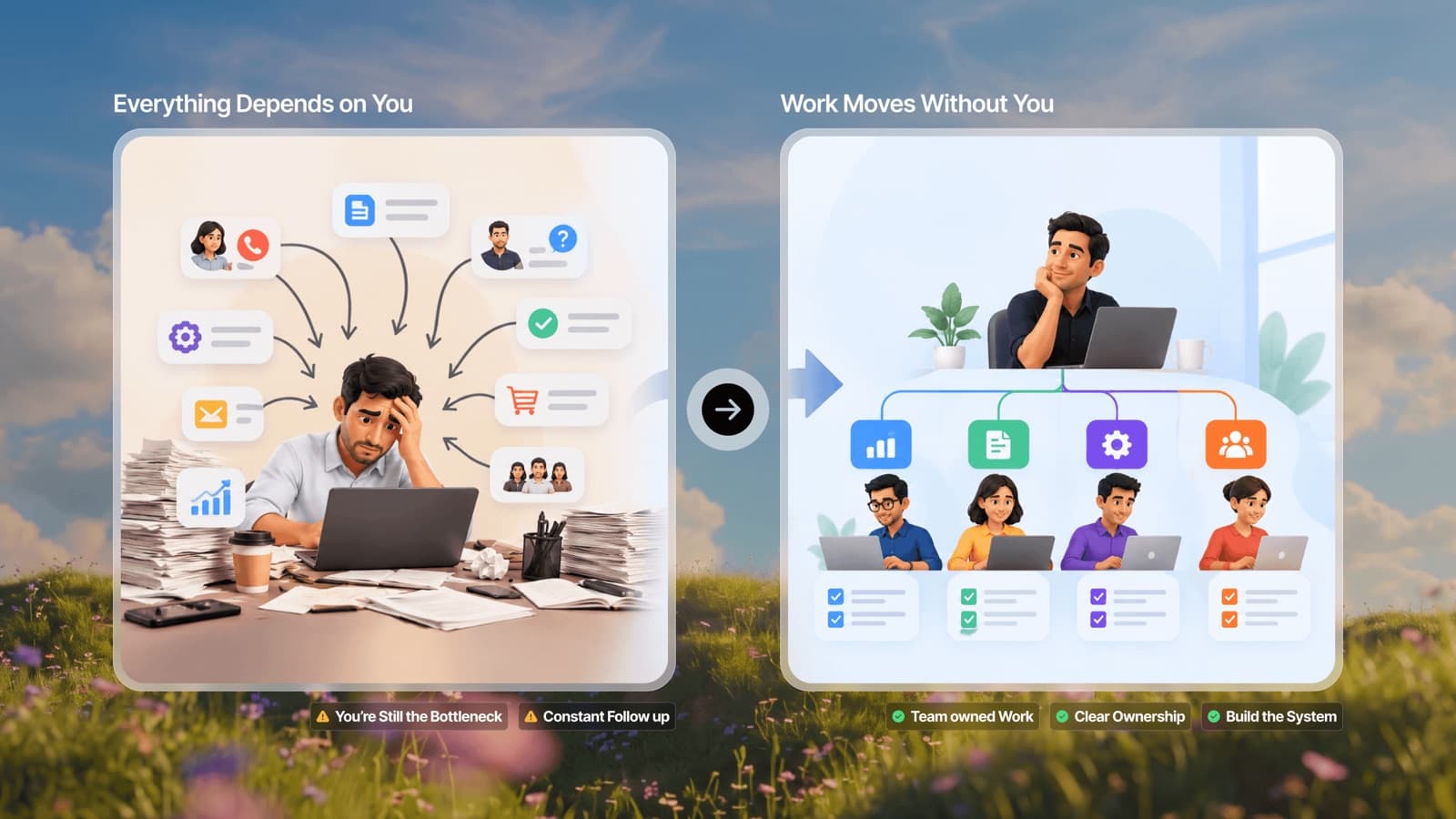

Ask a small business owner what happens when they take a week off and the honest answer is often: "I don't take a week off." Every approval, customer escalation and staffing question comes back to them. The business is growing, but it's growing on the owner's time - which doesn't scale.
Systemizing your business means building the structure, roles, processes and measures that let work happen correctly without you in the middle of it. Here's a practical framework.
What a "business system" actually is
A business system isn't software. It's the combination of:
- Structure - who does what, and who reports to whom.
- Roles - what each position is responsible for and can decide.
- Processes - how recurring work gets done, documented.
- Metrics - how you know it's working without checking everything yourself.
- Routine - the regular meetings and reviews that keep it all on track.
Most owner-dependent businesses have some of these informally in the owner's head. Systemizing is about making them explicit.
Step 1: Map where your time goes
For two weeks, write down every task, decision and interruption. Then categorise:
- Only I can do this (strategy, key relationships, big decisions)
- Someone else could do this with instructions
- Someone else could decide this with clear rules
- This shouldn't be done at all
Many owners find a big part of their week falls into the middle two categories. That's the work to systemize first.
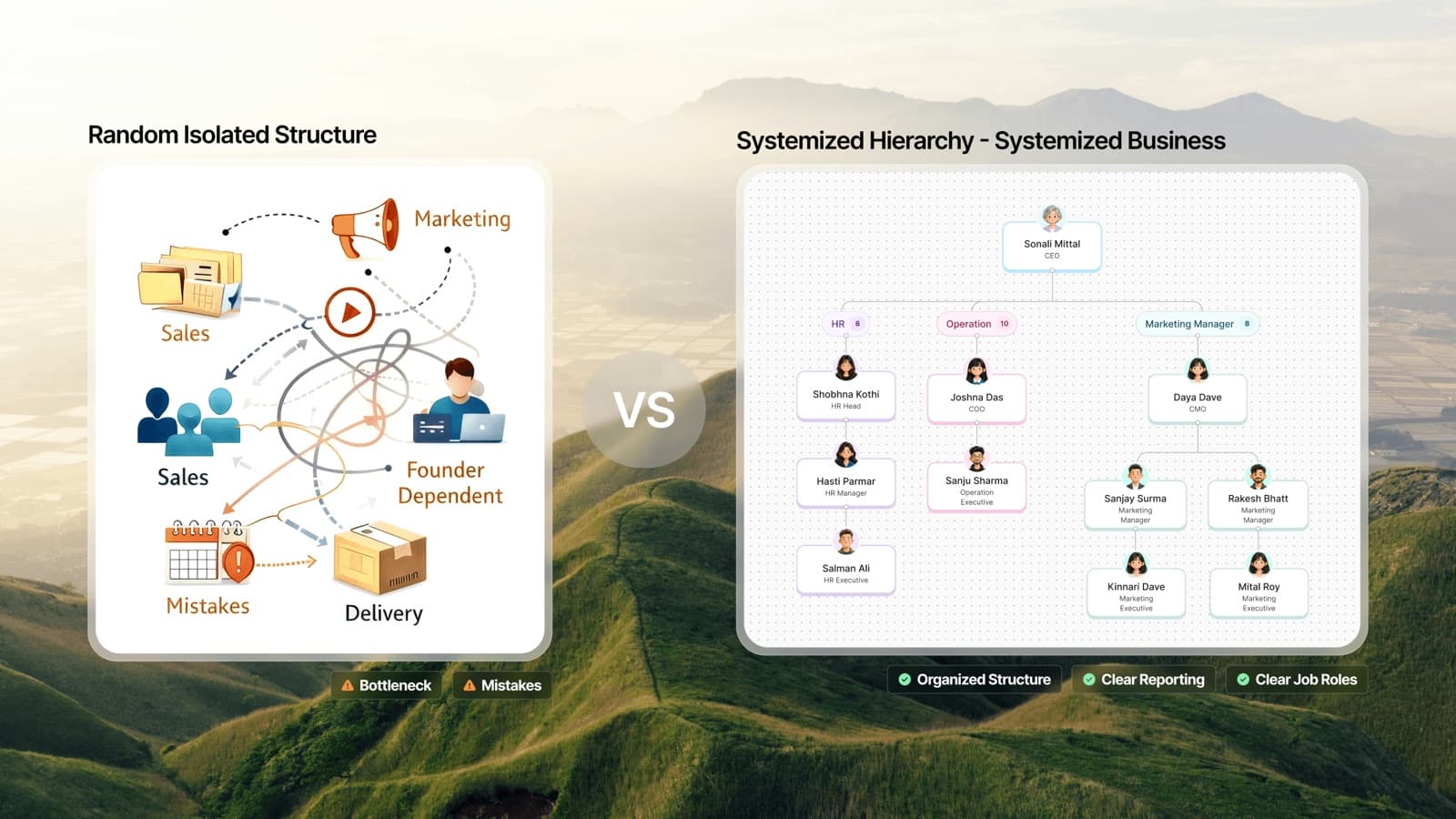
Step 2: Draw your structure
Create an org chart of your business as it actually operates today. Be honest: if everyone really goes to you for decisions, draw it that way.
Then draw the structure you need. Typically that means adding a layer between you and the team - a general manager, operations manager or department leads - so day-to-day decisions have a home that isn't you. The small business org chart template is a good starting point.
Step 3: Define roles and decision rights
For each role in the new structure, write clear roles and responsibilities, including:
- The outcomes the role owns
- The decisions it can make alone (with limits, such as spending or discount limits)
- What still needs your approval
Decision rights are what actually remove you from the middle. A manager without authority to decide will still route everything to you.
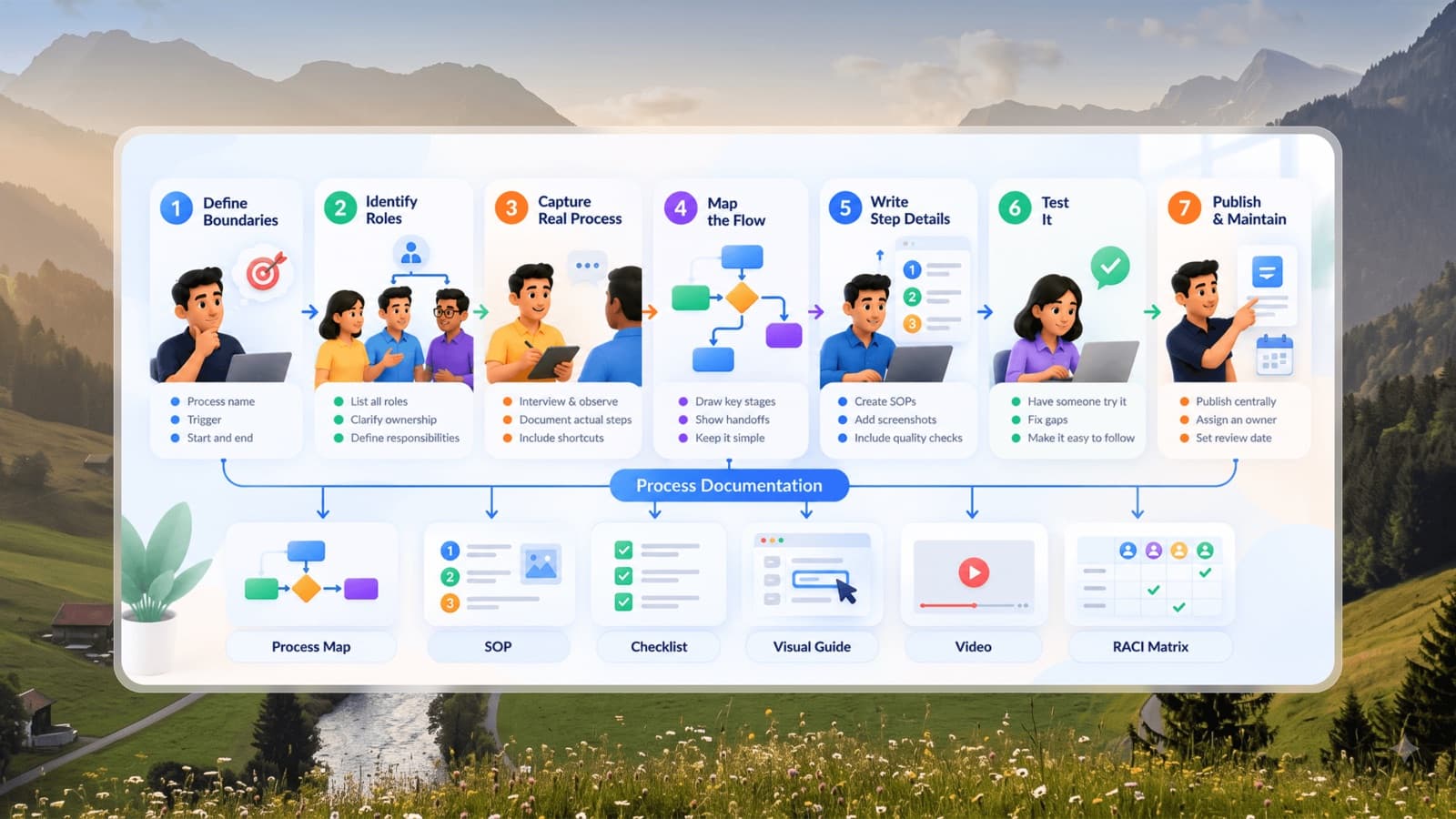
Step 4: Document your core processes
Pick the five to ten processes that run your business - typically sales and follow-up, order fulfilment or service delivery, invoicing and collections, customer complaints, hiring and onboarding. Document each one as SOPs and checklists.
Start with the processes that currently require you most. Record yourself doing them, turn the recording into steps, and have a team member test the result.
Step 5: Set a few key metrics
You can let go of daily involvement only when you can see what's happening. Choose a small set of numbers - five to ten - that tell you whether the business is healthy:
Each metric needs an owner who reports it weekly.
Step 6: Set a regular meeting routine
Replace random interruptions with fixed check-ins:
- Daily: a short team huddle led by the manager, not you.
- Weekly: metrics review with managers; decisions and blockers.
- Monthly: financial review and process improvements.
- Quarterly: goals, structure and role review.
When people know there's a set time for issues, they stop interrupting you for everything in between.
Step 7: Step back gradually
Don't disappear overnight. Use a staged handover:
- You do it, they watch.
- They do it, you watch.
- They do it, you review after.
- They do it, you see the metrics.
Start with a day away, then a few days, then a full week. Each absence reveals what's still missing from the system - fix it and try again. Our delegation guide covers this handover in detail.
Common mistakes
- Buying software before defining the system. Tools help clear processes work better; they don't create them.
- Hiring a manager without giving them authority. They become an expensive messenger.
- Documenting once and never updating. Systems need owners and reviews, or they slowly go back into people's heads.
- Trying to systemize everything at once. Five solid processes beat fifty half-written ones.
- Stepping back without metrics. Without visibility, anxiety pulls owners right back in.
The payoff
A systemized business is calmer to run, easier to grow, less dependent on any single person, and worth more if you ever want to raise money or sell. Most importantly, it gives you back time for the work that only you can do.
Start this week with Step 1. Two weeks of tracking your time will show you exactly where your first system needs to go.