

An organizational structure defines how work, authority and communication flow through a company. It decides who makes which decisions, how teams are grouped, and how information moves between them.
There's no single best structure - only the one that fits your size, strategy and stage. Here are the seven most common types, with honest trade-offs for each.
Quick comparison
1. Hierarchical structure
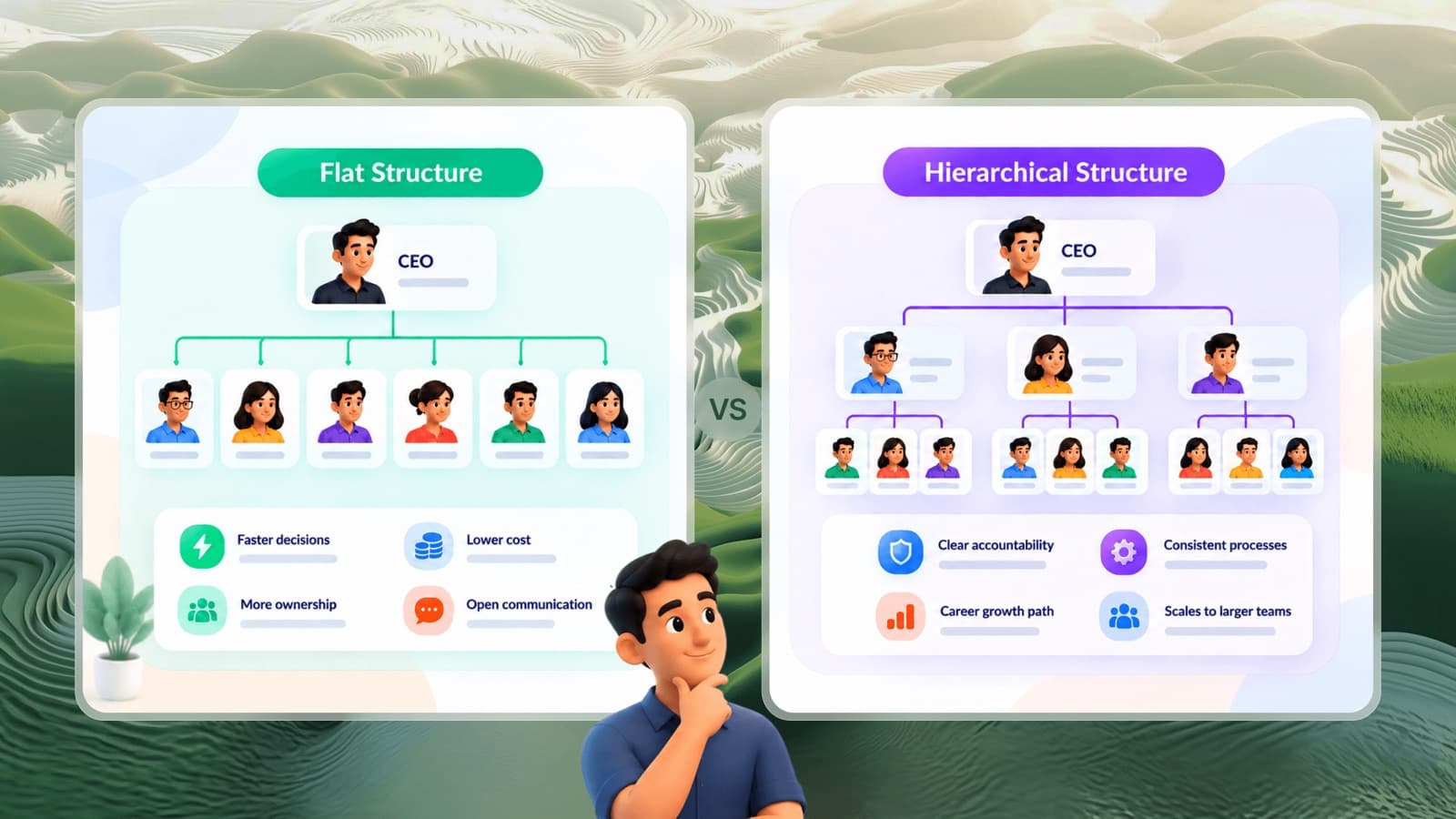
The traditional pyramid: authority flows from the top down through layers of management, and each employee reports to one manager.
Pros: clear chain of command, obvious career progression, clear accountability.
Cons: decisions can slow down as they move up layers; front-line insights may not reach leadership.
Best for: most growing businesses, especially those needing consistency and control, like retail, hospitality and manufacturing.
2. Functional structure
People are grouped by specialism - sales, marketing, operations, finance, HR - each led by a department head. Technically a form of hierarchy, and the most common structure for small to mid-size companies.
Pros: deep expertise within departments, efficient use of specialists, clear roles.
Cons: departments can stop talking to each other; cross-department work (like launching a new product) needs deliberate coordination.
Best for: companies selling one main product or service line. See our small business template.
3. Divisional structure
The company is split into semi-independent divisions, each with its own functional teams. Divisions can be based on:
- Product - e.g. separate consumer and enterprise divisions
- Geography - e.g. North and South regions
- Customer - e.g. retail and wholesale
Pros: each division can respond quickly to its own market; clear accountability for results.
Cons: functions are duplicated across divisions, which costs more; divisions may compete rather than cooperate.
Best for: multi-location restaurants, retail chains, hospital groups and companies with distinct product lines.
4. Matrix structure
Employees report to two managers at once: a functional manager (for skills and standards) and a project or product manager (for day-to-day priorities).
Pros: efficient use of specialists across projects; strong knowledge sharing.
Cons: two bosses can mean conflicting priorities and confusion over who approves leave or reviews performance. It needs very clear roles and responsibilities to work.
Best for: consulting firms, construction companies running multiple projects, and agencies. See the construction and marketing agency templates.
5. Flat structure
Few or no middle management layers; most people report to a small leadership group.
Pros: fast decisions, more freedom, low management cost.
Cons: doesn't scale well; leaders get overwhelmed, and people may be unsure who decides what.
Best for: early-stage startups and small specialist teams. We compare this in detail in flat vs hierarchical structure.
6. Team-based structure
Work is organised around mixed-skill teams (sometimes called squads or pods) that own an outcome - a product area, a customer segment or a client account.
Pros: teams move quickly and own results end to end; fewer handoffs.
Cons: specialists can feel isolated from peers in their discipline; career paths are less obvious.
Best for: software and product companies, digital agencies organised by client pods.
7. Network structure
A small core team coordinates a network of external partners - manufacturers, logistics providers, freelancers or agencies - that do much of the work.
Pros: lean and flexible; access to specialist skills without hiring.
Cons: less control over quality and timelines; heavy dependence on partner relationships.
Best for: D2C brands that outsource manufacturing and logistics, and companies built around freelance talent.
How to choose the right structure
Ask these questions:
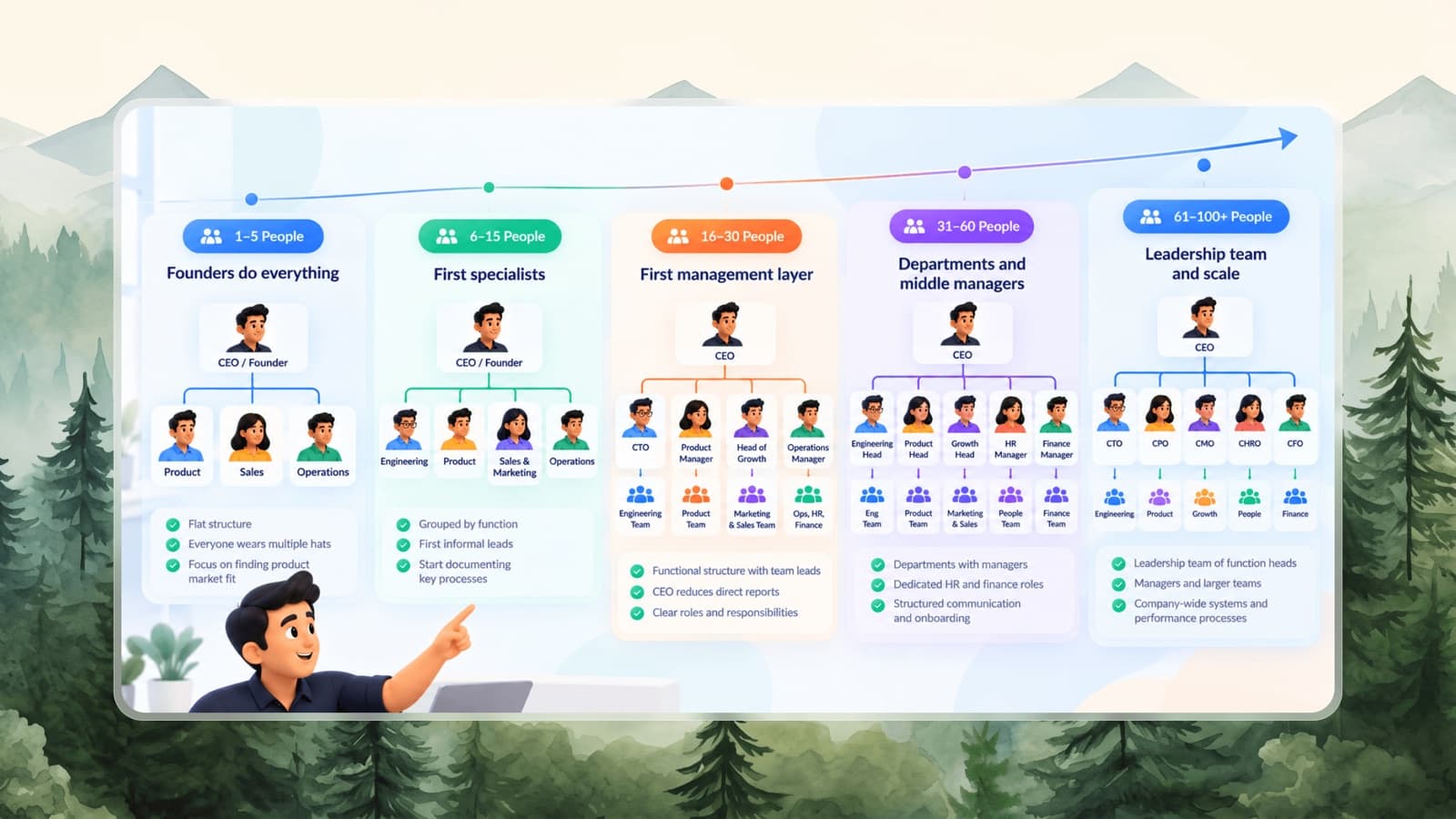
- How many people do you have - and will have in 18 months? Flat works at 10; rarely at 60.
- How many products, locations or customer segments do you serve? Several distinct ones point to divisional.
- Is most work ongoing operations or projects? Project-heavy work often needs some matrix element.
- Where are decisions getting stuck today? Your structure should fix the problem you have today, not one you might have someday.
Most real companies end up with a hybrid - for example, a functional structure with one mixed-skill team for a new product. That's fine, as long as everyone can see it.
Map your structure
Whichever structure you choose, draw it. A visual chart makes gaps and overlaps obvious and helps everyone understand how decisions flow. Start with the free org chart maker or browse org chart templates by industry.